
Older boats often have plenty of life left in them. A reliable engine, solid hull, and well-maintained systems can keep a vessel enjoyable for many seasons. However, the interior may eventually show its age. Faded vinyl, flattened cushions, and worn seams can make an otherwise dependable boat feel outdated. An upholstery boat seat update can provide a practical way to refresh the interior while improving comfort and everyday usability. If you are considering professional marine upholstery work, you can explore services here from Boat Upholstery Broward, a company specializing in upholstery for boats and yachts.
Start With a Detailed Interior Inspection
Before choosing new materials, owners should examine the current condition of the seating.
Look closely at the surfaces, seams, piping, and cushion edges. Damage in one area can sometimes indicate a larger problem underneath the covering.
Pay attention to:
- Cracked vinyl
- Faded surfaces
- Loose stitching
- Damaged piping
- Uneven cushions
- Compressed foam
- Moisture around seams
A careful inspection helps determine whether the boat needs minor repairs or a more complete restoration.
Evaluate the Foam Before Reupholstering
The outer material receives most of the attention, but foam plays a major role in comfort.
Years of use can compress foam and change the original shape of a cushion. Moisture can also affect foam when water reaches the interior through damaged seams or small openings.
Replacing worn foam during an upholstery boat seat project can restore support and create a better foundation for the new covering.
This is particularly useful for helm seats and cockpit cushions that receive frequent use.
Choose Materials for Real Marine Conditions
Older boats sometimes contain materials that were never designed for long-term exposure to harsh marine environments.
Modern marine upholstery offers a wider range of durable options. Materials can provide protection against sunlight, moisture, salt, and repeated cleaning while still offering attractive finishes.
When comparing options, consider:
- UV resistance
- Water resistance
- Mold and mildew resistance
- Color retention
- Cleaning requirements
- Surface durability
Selecting materials according to the boat’s environment can help prevent premature wear.
Consider the Vessel’s Everyday Purpose
An interior upgrade should reflect how the boat is actually used.
A fishing boat may need surfaces that tolerate frequent cleaning and contact with equipment. A family cruiser may benefit from comfortable cushioning and supportive backrests. A vessel used for entertaining may require a combination of spacious seating and refined styling.
Understanding these priorities can make an upholstery boat seat restoration more useful in the long term.
Refresh the Design Without Changing Everything
Owners do not necessarily need to redesign the entire interior.
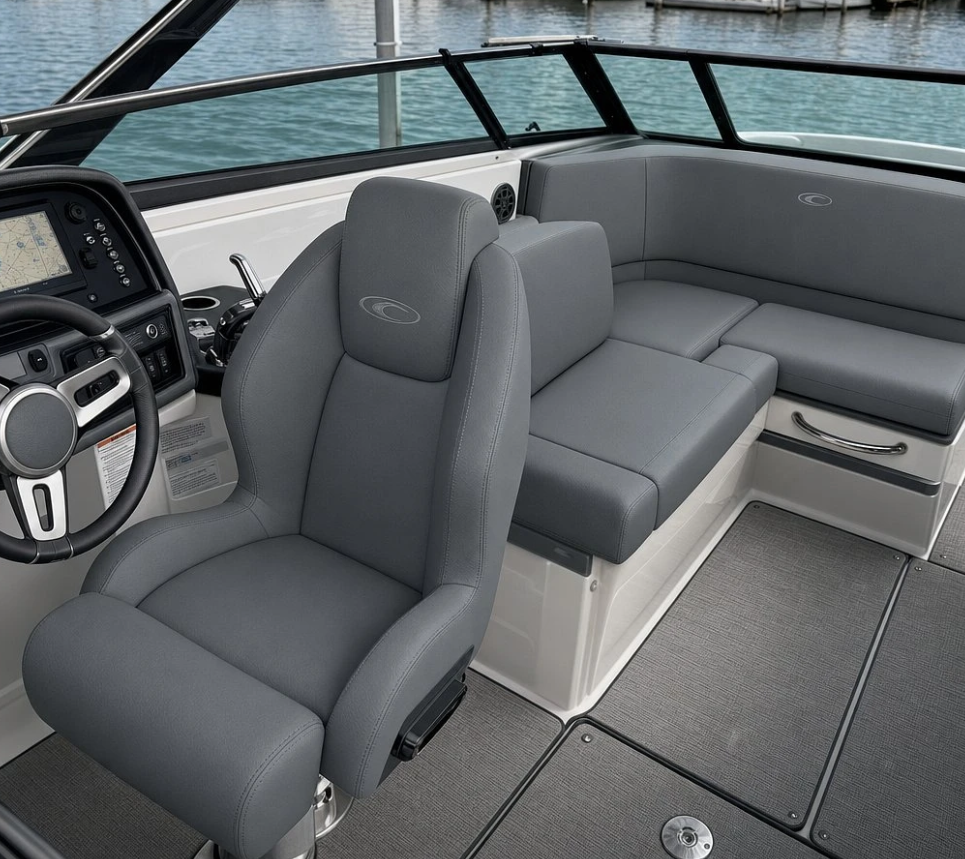
A new color palette can create a significant visual difference while preserving the boat’s familiar layout. Two-tone combinations can add contrast, while subtle stitching can give cushions a more tailored appearance.
Popular choices include:
- Light neutral colors
- Deep blue accents
- Contrasting piping
- Decorative stitching
- Textured marine vinyl
- Custom embroidery
These details can make an older vessel feel more contemporary without removing its original character.
Give High-Use Areas Extra Attention
Some seats experience considerably more wear than others.
The helm may receive constant sunlight and repeated use, while cockpit cushions can face moisture, food, sunscreen, and wet clothing. These areas often deserve priority during a restoration.
An upholstery boat seat in a high-use location should combine durability with comfort. Choosing stronger materials for these areas can help the finished interior handle everyday boating more effectively.
Protect the Interior After Restoration
A new interior still needs protection once the work is complete.
Regular cleaning can remove salt, dirt, sunscreen, and other contaminants before they accumulate. Owners should also allow wet cushions to dry completely.
Helpful habits include:
- Wiping seats after each trip
- Removing salt residue
- Drying cushions thoroughly
- Cleaning spills promptly
- Checking seams regularly
- Using suitable marine cleaning products
Consistent care can extend the useful life of new materials.
Storage Can Affect Upholstery Too
The boat may experience damage even while sitting at the dock.
Direct sunlight can continue affecting exposed surfaces, while rain and humidity can introduce moisture. A properly fitted cover can reduce exposure to these elements.
However, owners should avoid trapping dampness beneath a cover. Ventilation remains important, especially during longer periods of storage.
Keeping the interior dry and protected can help preserve an upholstery boat seat between boating trips.
Restoration Can Preserve a Familiar Boat
Replacing an older vessel is not always the best answer to an aging interior.
Many owners have strong reasons to keep their boats. They may know how the vessel handles, have customized its equipment, or simply enjoy its history.
Updating the seating can preserve those advantages while creating a more comfortable and attractive interior. A carefully planned upholstery boat seat restoration can therefore extend the useful life of a familiar vessel.
Final Thoughts
Interior restoration can make a major difference to an older boat without requiring extensive structural changes. By inspecting the seating, replacing worn foam, selecting marine-grade materials, and updating the design, owners can create a more comfortable environment for passengers.
An upholstery boat seat project can also protect the vessel from future wear when combined with proper cleaning and storage. With thoughtful planning and consistent maintenance, an older boat can continue looking fresh and performing well for many more seasons.